Author Archives: Eddy Steenbergen

Unknown's avatar

About Eddy Steenbergen

A Tasmanian IT professional who was in the business far longer than he cares to admit, and now uses those skills to support family history research, manage web sites, and write about Glenorchy matters.

Progress on Council disposal of un-needed properties

Over the past few years, Council has undertaken a process to examine its properties, identify those which have no short or long term value for Council or the city, and dispose of those properties.

The public has not received any information about progress on those disposals. It is now time to directly ask Council for information about its disposal process. To that end I’ve just emailed Council (June 21, 2021) the following question on notice

Over the past few years Council has undertaken a process to dispose of properties regarded as of no value to council. It has made a number of decisions to dispose of Council properties using the section 178 process.

Can Council please provide the following information for each property that Council has in fact disposed of since the beginning of 2020?
(a) the address of the property,
(b) the year and month of the disposal, and
(c) the manner of the disposal (e.g. sale, lease, rent)

TO BE CLEAR, I do NOT request any financial data nor any details of other parties to each disposal.

According to the Land Sales page in the Council website, no land is currently listed for sale. It does however show some properties as “Land approved for future sale”.

The following table shows all properties decided by Council for Section 178 disposal with the sale settlement date proved by Council in answer to previous question.

LocationSection 178Sale settlement dateProperty Id
11 Newman Court, Berriedale30 Sep 201926 Jun 20202680177
1 Bellette Place, Chigwell17 Dec 20181633037
5a Taree Street, Chigwell28 Oct 2019 Unlisted but still approved for future sale 5344697
1 Bournville Crescent, Claremont28 Oct 2019
14a Colston Street, Claremont28 Oct 2019Unlisted but still approved for future sale 5312820
3 Edgar Street, Claremont28 Oct 2019Unlisted but still approved for future sale5318560
19a Clydesdale Avenue, Glenorchy30 Sep 201923 Sep 20201760781
345 Main Road, Glenorchy28 Oct 2019Unlisted but still approved for future sale 1826090
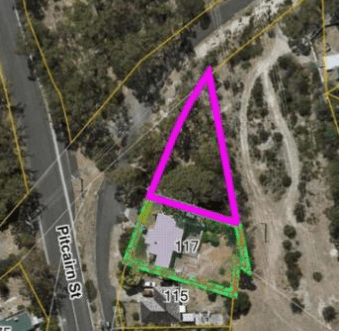
119 Pitcairn St, Glenorchy30 Sep 201928 Apr 2021. Housing Tasmania7581573, 7581581
36 Elwick Road, Glenorchy30 Sep 201928 Aug 20205367792
15 Hestercombe Road, Granton28 Oct 20191692627
3 Delwood Drive, Lutana30 Sep 20193 Aug 20205421541
11-13 Nielson Drive, Montrose30 Sep 2019 Unlisted but still approved for future sale 7765225
9 Barclay Crescent, Rosetta28 Oct 20195300205
29 Stourton St, Rosetta 25 Feb 2019 26 Nov 20209760543
53 Springfield Avenue, West Moonah30 Sep 201922 Apr 20219589103

Property described as 119 Pitcairn St in above list (purple boundary) – No. 119 Pitcairn Street Glenorchy (Title Vol 43742 Fol 1)

Glenorchy and the Australian Government Black Spot Program

Over the last couple of months we’ve seen three roadworks in Glenorchy – remodelling of the intersection of Marys Hope Road and Kilander Avenue ($54k), the intersections of Pitcairn Street and Montrose Road ($21k), and the installation of safety barriers on Collinsvale and Molesworth Roads ($115k).

According to this media release in August 2020 from the Australian Government, the three projects were funded to the tune of a total of $190k from the Australian Government Black Spot Program. The grants were not conditional on Council contributing any funds.

The media release rather dramatically described the locations as “dangerous crash sites”. I have not found any records of traffic accidents that would have been avoided by the works just undertaken. While the program appears to focus on sites with a history of crashes, the program’s website says about eligibility that the program:

recognises that there are road locations that could be considered as ‘accidents waiting to happen’. Therefore, some program funds may be used to treat sites where road traffic engineers have completed a Road Safety Audit and found that remedial work is necessary. This allows an opportunity for proactive safety works to be undertaken before casualties occur.

https://investment.infrastructure.gov.au/infrastructure_investment/black_spot/black_spot_sites_eligibility.aspx

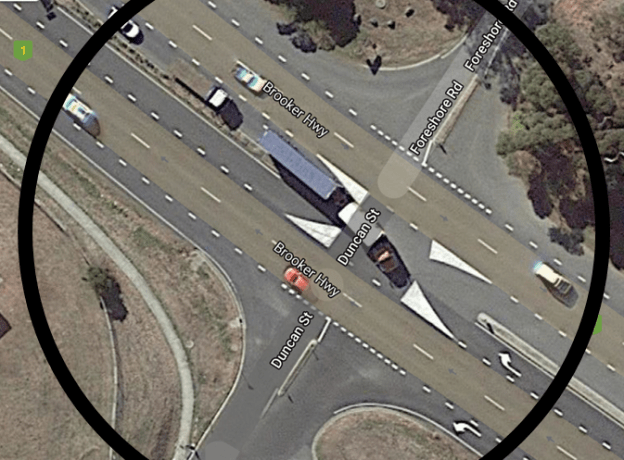
One location that should be considered for the Black Spot Program is the intersection of Brooker Highway with Duncan Street and Foreshore Road.

Council has already committed to constructing a skateboard facility and the Glenorchy Playspace close to the intersection.

Many regard the intersection as dangerous, an accident waiting to happen.

On one corner is Montrose Bay High School and the attendant staff, student and parent traffic.

On another corner is the soon to be upgraded community park with a car park to be doubled in size. A skate park and a regional playspace will dramatically increase the number of vehicles entering.

On another corner is light industry including bus, logistics, and other transport service. Cars, trucks of all sizes, and buses regularly cross the intersection from every direction.

The intersection is the only cross-road on the entire Brooker Highway without a roundabout or traffic lights. This is unacceptable.

The intersection is clearly well known as having safety issues. In the Brooker Highway Transport Plan Partnership Agreement (2011), a list of Safety Projects on page 4 under the heading “Next Three Year Priority Projects” contains the entry “Foreshore Road / Duncan Street intersection safety improvements”. The issue seemed to have been the “common practise [sic] for students to be dropped off or collected directly at the edge of the Brooker Highway” immediately adjacent to the intersection.

The State Government seemingly regarded the issue as serious enough to justify a submission to Infrastructure Australia in 2011 for funds to “upgrade” the intersection without giving details, but estimating cost at $5m.

The Brooker Highway is part of the major urban freight network in the broader north/south freight link and connects southern distribution centres to the northern ports.

The intersection is the cross-roads of Duncan Street and Foreshore Road with the Brooker Highway. It provides access to Montrose Bay High School and its oval. It provides access to facilities in the Montrose Bay Community Park – yacht club, 24 hour public toilets with full facilities, playground, GASP boardwalks, etc.

PS. The image shown for this post comes directly from Google Maps and shows two trucks plus a number of smaller vehicles crossing the intersection.

Update 4/7/2021: Question on notice to Glenorchy City Council

Answers were provided in the agenda for the 26/7/21 Open Council meeting and are included here in italics.

Dear Council

My questions relate to the intersection of the Brooker Highway and Duncan Street & Foreshore Road.

Council has already committed to constructing a skateboard facility and the Glenorchy Playspace close to the intersection.

Many regard the intersection as dangerous, an accident waiting to happen. On one corner is Montrose Bay High School and the attendant staff, student and parent traffic. On another corner is the soon to be upgraded community park with a car park to be doubled in size. On another corner is light industry including bus, logistics, and other transport services. Cars, trucks of all sizes, and buses regularly cross the intersection from every direction.

The intersection is the only cross-road on the entire Brooker Highway without a roundabout or traffic lights. This is unacceptable.

Q1. Does Council acknowledge the increased danger resulting from the upgraded community park and increased traffic volumes?

A: Council acknowledges the Brooker Highway crossing at this intersection is potentially dangerous, and that any increase in traffic using the crossing is likely to exacerbate any danger. However, Council would not proceed with any construction work on the proposed Playspace until all reasonable measures to adequately mitigate any increased risk had been investigated and/or implemented.

Q2. What has Council done to mitigate current danger or future increased danger?

A: The Brooker Highway is a State Highway which is owned and managed by the Tasmanian Government. Council has raised the intersection safety concerns with the Tasmanian Government on many occasions and will continue to lobby for safety improvements.

Q3. Has Council considered nominating the intersection for the Australian Government Black Spot Program? If not, why not?

A: Because the Brooker Highway is a State Highway, Council is not eligible to nominate it for a Black Spot project (the rules of the program mean Council can only nominate roads which it owns and manages under this program). The Tasmanian Government would be required to nominate it for Black Spot or other funding as appropriate. Council would support application lodged by the Tasmanian Government for funding to improve safety at this intersection.

Q4. Has Council lobbied the state government to nominate the intersection for the Australian Government Black Spot Program? If not, why not?

A: Council has raised the issue of safety at this intersection with the Tasmanian Government on numerous occasions and will continue to do so. Council has not formally requested that the State Government lodge a Black Spot Program application, however it is likely that this has been discussed informally at the officer level.

Q5. Did Council consider making traffic in the expanded Playspace car park one-way, utilising a new exit at the southern end? If not, why not?

A: The State government does not allow any new vehicle accesses onto the Brooker Highway, so this option was not considered.

I look forward to Council’s response.

Update 5/7/2021: Submission of nomination form

On 2/7/2021 I had submitted a Black Spot Nomination Form to the Tasmanian Department of State Growth.

I nominated the intersection of the Brooker Highway and Duncan Street stating the nature of my concern as

“The location is dangerous now and will become more dangerous when a playspace and skateboarding facility are built in the Montrose Foreshare Community Park; Council has already called tenders. It is the only right-angle intersection on the
Brooker Highway without a roundabout or traffic lights. Traffic enters and exits the intersection using every available means and it is a miracle that no serious accident has happened.
Corner 1 is the Montrose Bay High School with all its related staff, student and parent traffic.
Corner 2 is the already busy Montrose Bay Community Park with only one access point. Planned expansion by Council will double the size of it’s car park. All access is by car.
Corner 3 contains light industrial companies generating heavy traffic.
Corner 4 contains residential areas generating residential traffic.
Large numbers of cars, trucks and buses cross this intersection; it is an accident waiting to happen.”

Black Spot Nomination Form (Nature of Concern)

The next working day (5/7) I received a phone call from the Manager Traffic Engineering at the Department of State Growth, the staff member who collates nomination forms and prepares them for consideration by the Tasmanian Tasmanian Black Spot Consultative Panel.

He indicated to me that the likelihood of my nomination resulting in any funding was very low for two major reasons – the relatively small amount of funding available compared to the high cost of a solution such as traffic lights, and the large number of nominations expected from other councils and organizations. I was advised to take my chances with State Roads, a part of State Growth, by writing to its General Manager putting my case.

Update 30/8/2021: Comments at Council meeting

During discussion about agenda item 10 traffic safety at the intersection was mentioned by staff and some aldermen in arguing against Montrose Bay as the location for a single regional playspace.

The full text from the meeting agenda p18 is as follows:

During community consultation for the proposed Montrose Playspace, Council
received a number of submissions regarding concerns around traffic congestion in the localised area of the proposed site at Montrose Bay, and also around the safety of the intersection of the Brooker Highway with Duncan Street and Foreshore Road.

Northbound traffic on the Brooker Highway is required to negotiate that intersection
to access the Montrose foreshore. This requires crossing the 4-lane dual carriageway
of the Brooker Highway, which can be difficult.

Additional traffic will already be attracted to the Montrose Bay Foreshore site when
the new proposed Skate Park at that location is completed. Construction of the
proposed Playspace on the foreshore would further increase the volume of traffic
using the intersection, amplifying the current safety concerns.

Council has held concerns about the safety of this intersection for a long time,
however, is unable to take any steps to mitigate the risk given that the Brooker
Highway is a State Highway. Council has raised the safety issues at this intersectio
with the Tasmanian Government, which is investigating potential solutions to mitigate
the risk. However, no time frame for works at the intersection has been given.

While the presence of the traffic safety issue is not insurmountable, it does reduce the
desirability of the Montrose location compared to Giblins Reserve if there is a need to
decide between the two.

Mention in recording of Facebook livestream of meeting:

1:03:00 Alderman Richardson

“The pity of this is that it’s disappointing that Montrose Bay has this traffic concern and, can I just say, that traffic concern has been pointed out by Montrose Bay, and they’re still fighting it, and Council really needs to push that with the State Government, and something needs to be happening in that space before somebody’s killed.”

1:03:30 Mayor

“Director, would you like to explain what Council’s been doing to try to work towards that?”

1:03:31 Director Infrastructure and Works (Emilio Reale)

“We have been lobbying State Government for some time about that intersection. It is a bit of a complex issue because of the speed limits, school zone, and the way the intersection is aligned.

However at the last traffic management catch-up we’ve had with State Growth they did indicate that they have now got traffic lights for that intersection on their forward program but they did not indicate, it won’t be this year and it won’t be next, but it is on their list now to investigate.

So it is progressing and they’ve now recognized that because they keep a record of crash history, and that is a high volume site, so they are going to address it, and there’s nothing stopping Council looking at future development in that area once we know the traffic situation has been dealt with.”

Update 20/12/2022: Response from Department of State Growth to request for information

An email to the Department of State Growth resulted in this response from the “stakeholder consultant” employed by the department for the project.

I have been provided with your details and understand you are seeking information regarding the Brooker Highway/ Foreshore Road/Duncan Street intersection. I will be working with the project team during the detailed design phase, which is due to commence early next year. Projects such as this move to the construction phase once funding is received, and this project has not yet been funded so I’m unable to provide you with any detail regarding when construction is likely to occur or what the final design will look like. It is an important future project, and the Department of State Growth has engaged a team to finalise the design and consult with key stakeholders, so it is ready to be constructed as soon as funding becomes available. I will be able to provide more information on the project when the design is finalised.

Email 20 Dec 2022 12:10pm

Traffic statistics

A variety of traffic statistics at a location close to the intersection can be found on the internet where the Department of State Growth publishes data. The location is described in the website as:

A0090171P
a continuous classified counter located at a two way road [N/S] in Rosetta, Glenorchy on A0090, 390m W Of Foreshore Rd [UTS L10/ 7.76 – 9.21]

Use this link to access the data for that location. There is even data relating to the amount of traffic travelling at various speeds. Have fun.

References

Brooker Highway Transport Plan, Feb 2011. DIER. Page 17.

Glenorchy City Council Open Meeting July 2010 agenda. Page 236+. Adoption of Brooker Highway Transport Plan.

Brooker Highway Transport Plan Partnership Agreement, 2011. Page 4. “SAFETY PROJECTS”.

Police investigating two vehicle crash on Brooker Highway at Montrose“, Tasmania Police Media Release 22 April 2020 .

Glenorchy City Council Annual Report 2009-2010. Page 4. Report on Council’s work with DIER on development of the Brooker Highway Transport Plan.

Glenorchy City Council Open Meeting April 2020 minutes. Page 4. Answer to public question on notice regarding intersection.

State Government Submission to Infrastructure Australia 2011. Pages 33,34.

Traffic volume reports 1982- . Department of State Growth. Published at “geocounts.com”.

Dogs on Montrose Bay boardwalks … no!

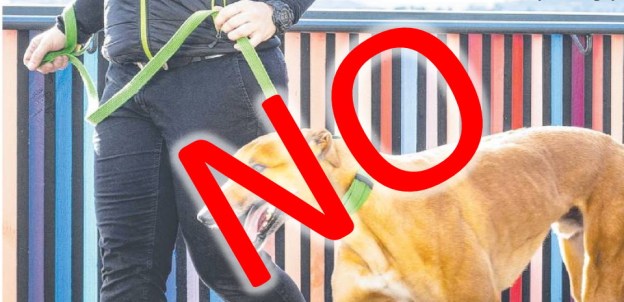
For years the Glenorchy City Council has banned dogs from being on the ex-GASP boardwalks at Montrose Bay. Unfortunately, there have been regular complaints about people ignoring the rule. The image attached to this post is based on a half-page article in the Mercury of June 27, 2021 (page 11).

it may seem odd that dogs are banned from the boardwalks while being permitted on leash elsewhere on tracks in the area.

Here is the explanation provided by Council back in 2019 after an email from me.

“Prior to opening of the GASP boardwalk, Council’s Animal Management and Council’s GASP director conducted an assessment into the suitability of dogs being allowed on the boardwalk.

Considerations in determining the suitability of dogs entering onto the boardwalk were given to:

  • the safety of animals and people when in a confined space (such as the boardwalk),
  • the aesthetics and quality of experience for all users, including wheelchair users and people with certain disabilities,
  • the known unpredictability of some dogs when confronted by certain fears or anxieties in confined places, such as the boardwalk where they are unable to escape,
  • unsociable or aggressive behaviours of some dogs towards people and other dogs,
  • certain users who may have a fear for dogs and are unable to safely leave the boardwalk if required, i.e. the boardwalk is largely situated over the river waters of Montrose Bay.

As a result of the above concerns associated with dogs accessing the GASP boardwalk, Council determined that allowing dogs to enter the boardwalk will pose a higher safety risk to people and some dogs generally, and it was therefore in the broader communities interests not to permit dog access onto the boardwalk.”

It seems to me that the rule is there basically because the boardwalk is something you can’t get off if you have a problem with dogs. If you’re walking along a normal path then you can step off to avoid them; you can’t do that on a boardwalk. You are trapped.

I hope that makes the situation clearer.

By the way, if you’ve got email, you send any other questions about the rules for animals to the address “animals@gcc.tas.gov.au”.

Get Out The Vote

We have a Glenorchy City Council by-election coming soon to elect a new mayor after Kristie Johnston’s election to the seat of Clark in Tasmania’s House of Assembly.

The last Council election at the end of 2017 was an aberration. Kristie’s Team appeared as an apparently ideal solution to a Council that was not working well. The honeymoon period for the team is well and truly over and no vote-magnet has appeared to replace Kristie. This means that the field is now wide open.

Every vote will count – so make sure you do.

The election is done by post. If you’re on the electoral roll, you will receive your voting papers in the mail sometime after June 22.

But you must be on the roll. And you have until 6pm on Thursday June 10 to make sure you are.

As a general rule, if you live in Glenorchy and are over the age of 18, you are eligible to vote. If you’re already enrolled to vote in the State seat of Clark then you’re automatically enrolled to vote in Glenorchy council elections.

But some people can vote for Council even though they can’t vote in Clark.

For example, you don’t have to be an Australian citizen to vote for Council. They must apply directly to the Council to get on the roll. Use this link to get the application form.

Voting at council elections is not compulsory.

But elections are done by post – so all you have to do is number boxes, put the voting slip in the envelope that comes with it, then post it. Seriously, how hard is that?

The law doesn’t say you MUST vote – but you should anyway.


Remediation of Tolosa Park Dam and Reservoir 2021-

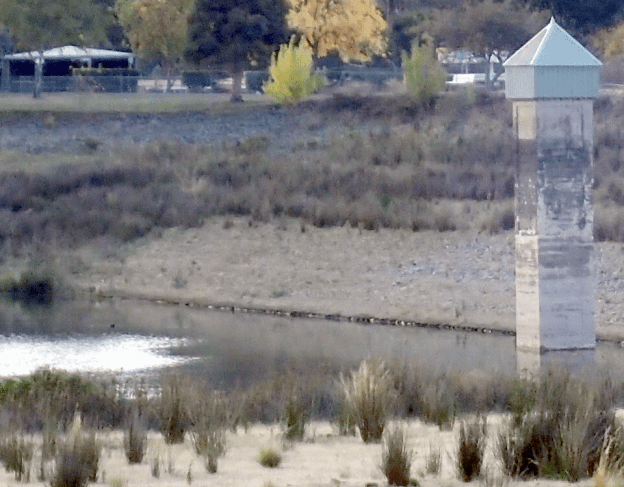
While there is excitement in some quarters about progress on design of a Tolosa Park BMX Facility (tenders called on 11/2/2021) , the Tolosa Park Reservoir next door has been in an unacceptable state for years. Many Glenorchy residents and ratepayers would like to know something of its future.

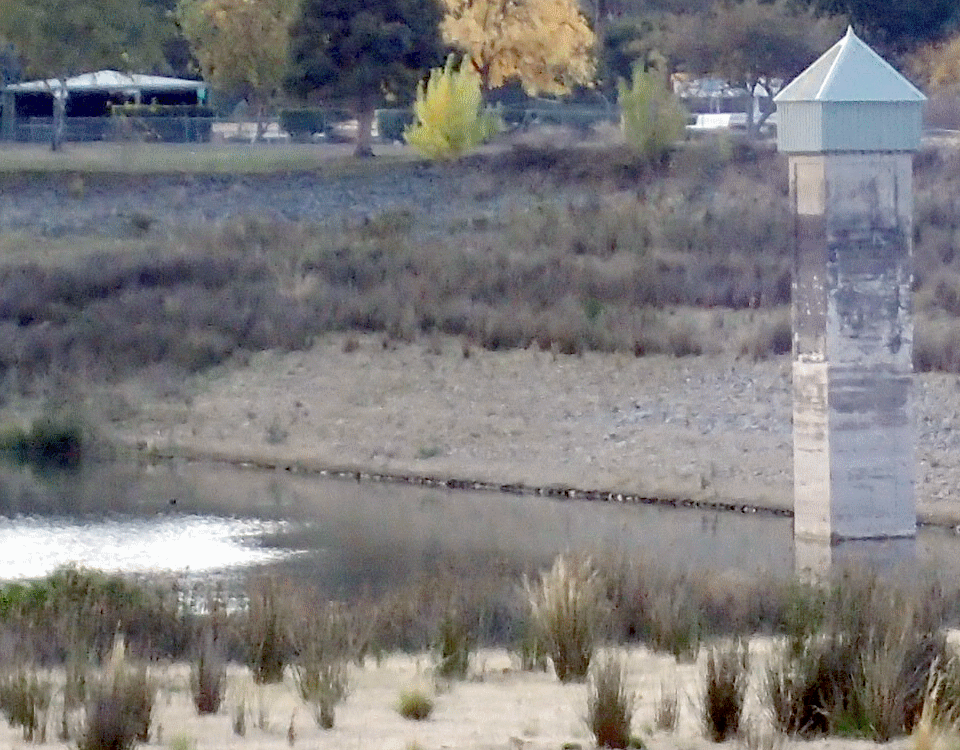
Tolosa Park Reservoir 1/5/2021

I’ve shown below a history starting with the 2021 Council AGM.

● ● ● ● ● ● ● ● ● ● ●

On March 9 at the Glenorchy City Council 2021 AGM (exchange starts at time 18:52 in Facebook recording) the then Mayor said the following in an answer to a question by a member of the public about the Tolosa Park Reservoir.

“As I’ve said on a number of occasions … Tolosa Park dam is an asset of Taswater.

It is their responsibility to decommission it.

While it sits on Council land Council will not accept the decommissioning process for anything less than a facility that is amenable to [the] public and that we can actually maintain that particular facility.

We’re not going to wear a liability due to Taswater’s decommissioning process.

We have been working very closely with Taswater to ensure that we get a good outcome for the community first and foremost, and part of that has been the commissioning of design work in conjunction with Taswater that has [?] commenced already. We have consultants who are working through that at the moment. I understand Inspiring Place have been engaged to do that particular work and we look forward to the outcome of that.

But our Council responsibility is to the ratepayers to ensure that when we get an asset returned to us it is in a condition that we can use it and will not be a future burden on our ratepayers. And we will hold and maintain that line with Taswater right throughout our negotiations.”

On April 10 I emailed questions to Council relating to the Mayor’s answer to the question at the AGM. The agenda for the April 26 open Council meting stated that answers to my April 10 questions were being finalised and will be provided ASAP. The following answers were finally included in the agenda for the May 2021 Open Council meeting.

Q1. Is a design project in fact currently under way?

A: Yes. Council and TasWater are currently working with consultants, Inspiring Place, to prepare a Master Plan for the former Tolosa Dam site. The Master Plan will outline a long-term vision of the area of the decommissioned reservoir and dam wall. However, further detailed designs work (e.g. engineering drawings) would need to be to develop the site in accordance with the Master Plan once it is agreed and adopted.

Q2. Was the company Inspiring Place in fact engaged as consultants to undertake the project? If not then who?

A: Inspiring Place has been engaged by TasWater to prepare the Master Plan for the Tolosa Reservoir site. Inspiring Place’s work is limited to the Master Plan preparation.

Q3. Was a public tender used to select the consultants?

A: This question would need to be referred to TasWater as TasWater was responsible for engaging Inspiring Place, under their procurement processes.

Q4. What was the brief given to the consultants?

A: TasWater ultimately briefed Inspiring Place, to prepare the Master Plan, meaning the question would need to be referred to them. However, Council participated in a workshop with TasWater and other stakeholders to develop the high-level outcomes that the brief instructed prospective consultants to achieve.

Q5. What are the key deliverables of the project and when does Council expect to receive them?

A: The key deliverable is the production of a Master Plan for the Tolosa Reservoir area, as well as a high-level cost estimate for its implementation. Council leadership received a preliminary draft of the Master Plan in early May, and that draft is being further developed to incorporate feedback. At this stage it is hoped that the draft Master Plan will be presented to Council for approval to release for feedback by July/August 2021.

Q6. What percentage of the project budget is Council committed to providing?

A: Council has agreed to contribute to a portion of the cost of the development of the Master Plan, however the exact percentage that Council will contribute has yet to be agreed.

Q7. The Mayor also made very clear that Tolosa Park Reservoir is an asset of Taswater, and it is therefore Taswater’s responsibility to “decommission” it. It is not clear to me what the Mayor means by “decommission”. Does she mean “remediate”? i.e. revert the land to pre-existing vegetation/landscape? Does she mean make the land “development-ready” (as Council has very generously committed to do for the ex-Berriedale Caravan Park for MONA)? Does she mean “make safe for public use”? If none of these then what did she mean by the term?

A: In using the term ‘decommissioning’, the Mayor was referring to:

  • the process of remediating the site to enable public use in accordance with the Masterplan before it is handed back to Council (once it is finalised and agreed between the parties), which will also involve removing all or part of the dam wall, and
  • the fact that the area will cease to be classified as ‘dam’ under Tasmanian legalisation at some point during the works but before it is handed back to Council.

● ● ● ● ● ● ● ● ● ● ●

On March 19 I emailed a set of questions to Taswater and received the following answers on April 13.

1. Is it true that the reservoir is still the property of Taswater and that Taswater is still responsible for its maintenance?

TasWater owns the infrastructure (the Tolosa Dam) whilst Glenorchy City Council retain ownership of the land upon which the dam is constructed. TasWater is responsible for the ongoing maintenance of the Tolosa Dam until such time that it is decommissioned and the site handed back to Glenorchy City Council.

2. Glenorchy City Council has discussed Tolosa Park Dam on a number of occasions. We got the impression that at the end of the day, the Council would take over ownership of the reservoir. Is that correct?

TasWater and Glenorchy City Council are currently working together to finalise the Master Plan for the handover of the decommissioned Tolosa Dam. There is agreement between both parties that the site will no longer be classified as a dam at the point at which this handover occurs.

3. Initially it seemed that before GCC took over the reservoir, Taswater would provide Council with a negotiated amount of money sufficient to remediate the reservoir? Is that your understanding?

TasWater and Glenorchy City Council are working to finalise agreements as part of a Memorandum of Understanding (MoU) agreed to in 2013 that detailed the works to remove the Tolosa Dam from the Greater Hobart Water Supply Network. This MoU included the works necessary for the new Tolosa Reservoir tanks that now replace the function of the Tolosa Dam. The MoU includes allowances for the decommissioning of the dam.  The works to decommission the dam will be conducted by TasWater in accordance with Master Planning outcomes agreed between TasWater and Glenorchy City Council. 

4. More recently GCC seemed to indicate that it would not take over the reservoir until Taswater had remediated it sufficiently (whatever that means). Is that your understanding?

TasWater and Glenorchy City Council will agree outcomes for the site as part of the Master Planning process, inclusive of feedback received through public consultation undertaken by the Glenorchy City Council in 2018.  As part of this process, a handover date will be agreed to.  At the point of handover, the remaining site will no longer be classified as a dam under Tasmanian Legislation.

5. Very recently GCC gave the impression that a project was under way (Inspiring Places were mentioned as consultants) to produce a design for the remediated reservoir. Are you aware of such a project? If so, what can you tell me about it?

TasWater and Glenorchy City Council are conducting the Master Planning exercise that will address the integration of the decommissioned Tolosa Dam into the Tolosa Park precinct. TasWater and Council are working with a multi-disciplinary team lead by Inspiring Place. Under the current program, the Master Planning exercise should be completed by 30 June 2021.

6. What does Taswater believe to be the next step in the process of the transfer to GCC?

Following the completion of the Master Planning process, Council and TasWater will agree responsibilities and handover points for the decommissioned Tolosa Dam.  The parties will then outline a program of works to progress the agreed outcomes.

We believe the above responses answer the questions you outlined and give the most current information regarding the process being undertaken.

● ● ● ● ● ● ● ● ● ● ●

At the April 2021 Open Council meeting the GM had the following exchange with Alderman King (the exchange starts at time 5:23 in Facebook recording).

Agenda item 9. Rescission of Historical Committees and Working Groups

Alderman King referred to item 7 in the list of bodies to rescinded – “Tolosa Park Master Plan Steering Committee” shown with comment “No longer operational and superseded by master plan being developed by Taswater”.

Alderman King: “Should that be ‘developed by Taswater in conjunction with Council’ or is it just Taswater’s master plan?”

General Manager: “My understanding is that Taswater is developing a master plan – Council is contributing funding to that as well – and at the end of that process we’ll have both a master plan and some accurate costings. We are making a contribution to it, yes.

Alderman King: “It is kind of in conjunction with us then in that sense, or am I putting too much emphasis on it?”

General Manager: “The onus is really with Taswater so Taswater is really driving that. Formerly we had an earlier master plan process that involved Council being the driver and that process didn’t proceed. This is a new process with Taswater in the driving seat.”

Alderman King: “Do we have an end date on that?”

General Manager: “I don’t have it to hand.”

I emailed questions relating to this exchange and the following response appears in the agenda for the June 2021 Open Council.

Q1. What is Council contributing to the project?

A: Council’s financial contribution is half of the cost to form a Master Plan and high-level cost plan for the works, nominally $200,000. Council has been involved as a key stakeholder in the Master Planning process with TasWater and their consultant team led by Inspiring Place. Throughout the master planning process Council has ensured feedback from previous community engagement is captured in the final masterplan.

Q2. What are Council’s roles in the project?

A: Council, while not being directly contracted with the Master Planning team, is heavily involved and contributing to the Master Planning process in conjunction with TasWater to ensure the proposals achieve the best possible outcomes for the Glenorchy community. The aim of the Master Plan is to provide a usable reserve area immediately on the completion of the works and upon the hand over to the Council, allowing the remediated reservoir and former dam wall area to be used by the community as soon as possible. Some further works, including upgrades to the greater Tolosa Park area would then be carried under Council’s capital works program.

Q3. Why didn’t the original project driven by Council proceed?

A: Council has been working closely with TasWater on this project to ensure that the Master Plan reflects the feedback received from the community, while also achieving TasWater’s primary aim of decommissioning the dam wall. Several options have been investigated to determine the most efficient use of both Council and TasWater resources. The past versions were not considered to be suitable in that they did not adequately meet the needs of all key stakeholders (TasWater, Council and the Glenorchy community). The draft Master Plan will present the preferred option but is still being finalised.

Q4. When does Council expect to receive the results of the project?

A: A preliminary draft masterplan has been presented to Council leadership and is being further developed to incorporate feedback that was received. At this stage it is hoped that the draft Master Plan will be presented to Council for approval to release for feedback by July/August 2021.

● ● ● ● ● ● ● ● ● ● ●

7. 1/5/2021 – Email to Taswater re 26/4/4021 open council

Council was deciding to disband its “Tolosa Park Master Plan Steering Committee” on the basis that it is “No longer operational and superseded by master plan being developed by Taswater”.

The General Manager said that the “onus is really with Taswater so Taswater is really driving that. Formerly we had an earlier master plan process that involved Council being the driver and that process didn’t proceed. This is a new process with Taswater in the driving seat.”

I’m a little confused because all your previous answers referred to “TasWater and Council”. Can you please clarify the situation for me? For example, what role is GCC now playing in the project? And when did the “new process” begin? And is it still scheduled for completion on June 30?


No response received from Taswater by May 31. Still waiting.

● ● ● ● ● ● ● ● ● ● ●

8. 21/6/2021 – Exchange at special Council Budget meeting

Agenda item 10 related to the Glenorchy City Council Annual Plan.

As soon as discussion was opened, the following exchange took place. I’ve transcribed all comments with only tiny edits for readability. Times refer to the livestream of the meeting via the Council’s official Facebook page.

1:13:42 Alderman Richardson – There’s one item that sits in the Annual Plan that really grates on me. And that is “3.1.2.08 Delivering the Tolosa Park Master Plan with Taswater”.
And I went through the annual plans … this has been sitting in the Annual Plan every year and I went back as far as 2012. So next year will be the tenth year anniversary of this item sitting on our annual plan.
I think Council really does need to make this a priority and delivering this – I know that working with Taswater and getting a solution is problematic but I really do think this should be a priority for Council to sort … and not see “developing a master plan” sit on the annual plan again next year.

1:14:56 General Manager – Yes I agree with Alderman Richardson. It has been a very protracted process in respect of the Tolosa Reservoir.
The situation here is that the … Council … we have certainly seen some recent very good progress.
But a potted summary of this would be that this has been a holding pattern for quite some time because of the uncertainty of about whether or not we were getting any fill associated with the development of the MONA Hotel.
Once that MONA Hotel project was deferred we had clear guidance in terms of where we were heading so officers have negotiated with Taswater and have entered into a jointly funded master plan process.
That master plan process is intended to deliver base level open space to Council so – essentially provide water bodies, move earth within the contours of the former dam site, and create base level open space that Council can inherit moving forward as a viable base open space product to the option of further work down the track.
So where we’ve got to is essentially that Inspiring Place have carried out that work with Taswater and Glenorchy City Council.
And an internal working group from Council has looked at that very recently in the last couple of weeks in relation to the evolving larger context around this site in terms of works that are being undertaken around the Mountain Bike Park and also the more general work around the relocation of the BMX track to Tolosa Park.
And as a result of that officers have provided guidance to Taswater and consultants.
And where we’re at now is that the consultants will finalise that work and then undertake detailed costings and that will then be brought back to Council for consideration.
So I absolutely agree with Alderman Richardson. It’s been a frustrating stop and go process but we’ve made good recent progress and we believe that we’ll have a product to come back to Council within the near future.

● ● ● ● ● ● ● ● ● ● ●

9. 20/12/2021 – Agenda item “Tolosa Dam Reintegration Project” for Closed Session of Council meeting

Council has released no information about this agenda item or the result of discussion.

● ● ● ● ● ● ● ● ● ● ●

To be continued…

Secret Planning Business

Many applications for planning permits do not make it to the Planning Authority. In fact, they may be submitted, decided and acted upon without any public announcement of the decision or publication of any details of the development,

An application can be decided (strictly speaking “determined”) by someone on Council staff if their position has been formally granted the authority to determine the application.

Some Council staff have the authority to decide certain types of applications. They can do that because the General Manager of Council has given their position a delegation under section 64 of the Local Government Act 1993. You can read the delegations as at July 2020 here.

As a general rule, an application will only be passed to the Planning Authority if no staff member has the authority to determine it. If you take a look at a typical agenda item for the Planning Authority you will see a short item entitled “Reason for GPA” which explains precisely why no-one in the Planning Services group could determine the application.

What I would like to address in this post is not delegation per se. It is after all often more efficient to have decisions made by qualified staff were practicable.

But the public invisibility of that process and the absence of accountability for decisions made under delegation concern me greatly.

INVISIBILITY

The situation is Glenorchy lacks transparency. The GCC Coordinator for Planning Services wrote earlier this year that “As there is no legislative requirement to do so Council does not provide public notice of applications that have been determined under delegation nor does it maintain a public register of applications determined under delegation.”

At least three other Councils publish basic details – Hobart City Council (search page for recent approvals only), Meander Valley Council (recent approvals only) and Dorset Council (recent approvals only). Devonport City Council goes further, providing in the agenda for each Planning Authority Committee meeting a list of all approvals since the previous meeting (download a sample).

Even though no legislation compels Council to provide the public with any data about applications determined under delegation, there is clearly no legislation prohibiting it. Council admits that (see Appendix 1 below).

In any case, it would be truly disappointing if a Council took actions only if compelled by law. Much legislation mandates standard or minimal types of behaviour. Any Council which did not explore all legal service improvements would label itself as lacking imagination or an interest in innovation.

ACCOUNTABILITY

There are also potentially serious issues with accountability. The staff determining a planning application under delegation — regardless of their knowledge, regardless of their competence, regardless of their desire to make the correct determination — have little or no accountability for their determination.

Staff must write a report for the Planning Authority if the application goes there, but any report written for a determination by delegation will not see the light of day. And if public does not know the application existed, they cannot ask questions about it.

I suspect the applicant may have appeal rights to RMPAT for example, but no member of the public has any opportunity to have their say.

Two types of decisions are relevant – the initial decision that a DA can be determined under delegation, and the actual determination of the DA.

Delegation effectively eliminates public engagement.

THE PRIVACY FURPHY

On a couple of occasions Council staff, most recently the Director of Planning, have suggested there are “privacy issues” to consider. The most substantial writing on this appears in the agenda of the 25/1/2021 Council meeting in an answer to a Question on Notice. It seems to indicate that there are two classes of DA – those with privacy and those without, and blames legislation for that situation.

Are they suggesting that DAs determined under delegation demand a higher degree of confidentiality than those determined by the Planning Authority or RMPAT?

Are they suggesting that having your DA determined under delegation provides you with a legitimate mechanism to keep your DA secret?

Surely all DAs have the same privacy settings.

OPEN THE BOOKS NOW

The importance of transparency and accountability is unaffected by the size or cost of the proposed development. It is impossible to see any legal or ethical justification for maintaining secrecy over the determination of planning applications under delegation.

The Council’s Planning Application form which can be found here on the Council’s own web site contains a section “Applicant’s Declaration” in which it says

By providing Council with the plans and documents attached to this application (“Documents”), I:
▪ authorise Council to copy the Documents, attach copies to Agendas for any relevant Council meetings and release copies to the public; …

So applicants clearly regard the application as public. This makes Council’s arguments seem simply obstructive.

As a matter of public interest, the Glenorchy City Council should without delay implement the same level of reporting as the Devonport City Council for determinations under delegation.

Appendix 1 – response of Council to question on notice 25/1/2021

[Note that the information requested through the question for each delegated determination comprises only four items – application number, location of development, development type, and date of approval.]

There are provisions in State legislation for making the public aware of applications for discretionary planning permits by requiring that applications are publicly advertised. Provisions also allow representations to be made on these applications to facilitate public participation in the assessment process.

Notification of the granting of a planning permit is only required to be given to persons who made a representation during the advertising period. This is to enable those persons to consider whether they wish to appeal the granting of the permit.

State legislation does not require Councils to publish lists of permits that have been granted on their websites or in meeting agendas. While some Tasmanian Councils do choose to provide information on permits approved under delegation on their websites and/or in Council or committee agendas, the potential benefit that arises from increasing community awareness of what permits have been granted must be weighed against the fact that, aside from persons who made a representation during the advertising period, the public have no ability to challenge or seek changes to a permit once it has been granted. Publishing a list of planning permits that have been granted would potentially raise unrealistic expectations on the part of some members of the public that they could initiate changes to a permit. It would also make public information about properties that is currently known only to the landowner, their representatives and Council, without the consent of the landowner.

Council currently meets all legislative requirements related to the advertising of applications for discretionary planning permits and, in addition, provides copies of these applications on its website for the duration of the advertising period. Further, Council will, on request and subject to receiving the consent of the owner of a property to do so, provide details or copies of a planning permit on a particular property to members of the public. Should State legislation change in the future to require Councils to publish information on permits that have been granted, Council will of course comply with that requirement.

In response to the three questions:

  1. Council does not intend to provide a list of permits granted under delegation for the 2020 calendar year, as it is not the practice of Council to provide members of the public with information about private properties that is not required to be made public.
  2. Council does not intend to publish a list of permits granted under delegation in the agenda of the Glenorchy Planning Authority as there is no statutory requirement to do so and doing so would make public information about properties that is currently known only to the landowner, their representatives and Council.
  3. Council is unaware of any specific legal impediment to publishing a list of
    permits granted under delegation, although any release of such information is subject to the provisions of the Right to Information Act 2009 and applicable privacy legislation. In providing copies of advertised applications on its website, Council is merely facilitating public access to information that is already required by legislation to be made available to the public.

Giving Glenorchy a civic heartbeat

Our Council has dedicated half the $5m loan from the State Government to the Cityscape Project. It has told us virtually nothing about its objectives.

In the Nov 14 Mercury we read a public notice titled “Request for Tender No 0801 – 2020 – Consultant Services – Development and Delivery of a Sub-precinct Masterplan CityScape Project – Phase 2”.

Only the most observant would have noticed the word CityScape in this verbose title. The documents for the tender give the public its first impression of what CityScape is really all about.

The tender encompasses the entire city block containing the Council Chambers, referred to as the “civic heart”.

It calls for “concept designs for a modern, efficient, all-abilities facility that will house commercial tenancies, Council Chambers and other government services as well as concept designs for the external open public spaces surrounding the facility.”

Yes – another masterplan.

The masterplan “will provide Council with the necessary information to attract investment and funding from private, State and Federal Government funding sources”. And Council will find it useful when funding opportunities arise unexpectedly.

Council is clearly completely comfortable with co-locating with other functions, commercial or community-focused, hoping that more people will use the facilities.

The tender expects the project to last about six months starting early in 2021.

Council is to be applauded for searching for ways to make council premises more efficient and inviting, and services more convenient and comfortable. Aldermen have already participated in two workshops – “Layout and configuration of Council Chambers” on September 14, and “Council Chambers reconfiguration” on November 9.

But I do hope that the masterplan does not reduce the amount of vegetation in the block (gardens, lawn, trees, etc) as every other Council development seems to.

According to its Project Management Plan (PMP), CityScape will have a strictly advisory External Stakeholder Reference Group (ESRG). It seems that project updates presented to the ESRG will then “be circulated to stakeholders and the community“.

Glenorchy residents will have to wait for the masterplan to see details of CityScape, a project projected to consume half the $5m loan.

Curiously, it may well be the cheapest economic recovery project, Activity City, that returns tangible results first. Many of us have probably learned of interesting businesses we were not aware of before.


PS 16 December 2020

On December 11, the closing date was put back to January 6.

On December 15, the specification of the deliverable was extended as follows

“This masterplan will not only provide for Glenorchy City Councils’ and adjoining businesses current and future accommodation needs but will also provide the mechanism to explore further commercial opportunities for the precinct. As part of the design process, it is expected that the consultancy team will explore various iterations of building form, massing and maximum permissible building envelopes. This exercise will allow the exploration of potential for additional floor space (over and above the basic masterplan requirements) that may be suitable for commercial or retail leasing purposes. This additional floor space can then be analysed for potential rental yields and developed into an Investment Case Report exploring various options for Council to consider. An example Report from the City of Melbourne has been attached.”

Council is clearly looking for opportunities for income generation. This adds significantly to the scope of the project, certainly increasing its cost and its duration.


Closed yes, secret NO

As a general rule each Council meeting starts with a public or open meeting and finishes with a closed session where aldermen discuss matters without the public present.

All the public is told about the closed session is at the end of the main agenda document. For each matter we are given a title like

“Exemption to enter into an agreement for the provision of commingled processing”

followed by a sentence starting with the words

“This item is to be considered at a closed meeting of the Council by authority of the Local Government (Meeting Procedures) Regulations 2015 Regulation 15(2)…”

which simply tells you which regulation(s) Council is using to justify discussing that matter without the public present.

In normal circumstances, that is all we will ever know about that agenda item, the information aldermen will consider and the decision they make, unless the decision is particularly newsworthy or casts Council in a positive light (when we receive the heavily filtered results of a media event).

The public has a right to know more about

  • how Council justifies discussing a particular matter in closed session,
  • the substance of the matter being discussed, and
  • the results of that discussion, usually a motion passed (or rarely rejected).

……………………………………

Let’s start with how a matter gets into the closed session. The General Manager has final responsibility for preparing the agenda, and must determine which items will appear in the closed session (presumably in close consultation with the Mayor). Local Government regulations provide Council with a list of permitted justifications that you can read here. But the regulation does not force Council to consider those matters in closed session; it says that Council may do so, not that it must!

In any case, the process for agenda production is entirely opaque and the bare references to regulations provides too little information to be useful.

……………………………………

Next, the agenda provides so little information for each item that it is impossible for ratepayers and residents to exercise their democratic right to lobby aldermen.It is far too easy for Council to make a blanket judgement that every detail of an agenda item must not be made public.

The current policy of providing the public with only a bare bones agenda for a closed session is un-necessarily restrictive. There is a great deal that could be released to the public without creating any commercial advantage or disadvantage to entities party to the decisions. The current ad hoc approach ensures that the public learns nothing of controversial matter.

This document makes a case for including with each item those portions of the report considered by aldermen which do not breach any RTI, privacy or confidentiality issues. Aldermen will have their full agenda and reports. The public will have an agenda containing information they are permitted to read. Nothing in the Local Government (Meeting Procedures) Regulations prohibits that.

……………………………………

Finally, why can’t the public routinely be provided information about the outcomes of the closed session?

This document makes a case for requesting Council to provide a report of each closed Council meeting as soon as practicable after the closed session ends. The Mayor has on occasion issued media releases or conducted media interviews immediately after a closed session. This seems to take place where a decision is regarded as newsworthy or casts a positive light on Council. Clearly, for some matters there is no need to wait for minutes to be confirmed before the decision can be announced. And for those matters, it appears to be no problem producing a summary. So why not every decision?

The “report” should contain at least a summary of decisions made.

If the motions were worded to exclude private or confidential information then the report could simply be the minutes. There is no reason why motions and the result of their votes cannot be shared provided private and confidential information is excluded.

For example, instead of

“Resolved to accept response of $52,000 from John Smith P/L for tender for footpath repairs in Howard Street (tender# 9999)”

write

“Resolved to accept response from John Smith P/L for tender for footpath repairs in Howard Street (tender# 9999) at terms indicated in report provided to meeting by Council”

or

“Resolved to accept response from John Smith P/L for tender for footpath repairs in Howard Street (tender# 9999) at terms indicated in meeting agenda”

The “report” must not take the form of a media release produced with a PR objective.

It will not for example exclude information that Council may find inconvenient to have in the public arena. It should only exclude what must be excluded for privacy or confidentiality.

Some agenda items contain a motion of the form “That the recommendations of the report be adopted”. The “report” should not simply mention the motion; that would provide no information whatsoever. It must provide some indication of the content of the recommendations.

……………………………………

The Local Government (Meeting Procedures) Regulations 2015 contain a regulation (no 34) which controls aspects of the minutes of closed meetings. Regulation 32 discusses minutes in general. Nothing in those regulations, or the Council’s own policy relating to Meeting Procedures, appears to limit the ability of the Mayor to produce media releases and conduct media interviews on Council decisions. The regulations and the policy treat privacy and confidentiality as sacrosanct as do I.

……………………………………

The report could be produced by Council staff in the same way that meeting agendas are produced, a routine document that could be produced by any staff member given the rules for its compilation.

DPAC’s published guidelines state “During a closed meeting, the council decides whether discussions, reports or documents and outcomes relating to the closed meeting need to be kept confidential or can be made public.”

Transparency was a term often used in the early days of this Council. Legislation gives Council a great deal of discretion in the management of closed sessions. Providing the public with more information about (a) allocation of items to closed session, (b) the substance of each agenda item, and (c) a summary of the outcomes of closed meetings, would be a step in the right direction.

……………………………………

References

Here are a few items you might like to read.

A short item from Lindsay Taylor Lawyers “Easier Access To Agendas And Minutes Of Closed Part Of Council Meetings”

Calgary City Council (Canada) – “City staff make recommendations to improve transparency surrounding closed-door council meetings”.

City of Guelph (Canada) Closed Meeting Protocol.

Gaming the system

When developers encounter a planning scheme with an enormous amount of discretion in the hands of planning authorities, it is not surprising to find them pushing the envelope with their proposals, relying on the fuzziness of many of the performance criteria in the planning scheme.

Take no notice of those who speak as if they regard the planning scheme as if it were an algorithm that takes the details of the proposal and spits out the single correct recommendation for approval or rejection. Doubt those who dogmatically claim that a proposal is “within the planning scheme” where any discretions are involved.

For example, a proposal could be rejected on the grounds that it has “an unacceptable impact upon residential amenity on land within a residential zone by virtue of increased noise emissions”. There is no magic formula for calculating the impact of noise, for deciding whether it is acceptable or not. Two people could legitimately disagree.

The Macquarie Street Apartments proposal rejected by Hobart City Council earlier this week was clearly a high risk proposal and the developers would have known it. It was double the height of all other buildings within hundreds of metres, and it has all the design aesthetics of a LEGO model made by a toddler.

The developers tried to game the system. They relied on the positive bias of Council staff who, believe it or not, try very hard to make proposals possible. Council staff work to find a set of conditions that makes the proposal acceptable: they very rarely fail particularly if the developer has had the good sense to discuss their proposal with the planners earlier. Only truly awful proposals are recommended for rejection!

In the system they’re trying to game, it makes sense to make the proposal an ambit claim.

Council approval would mean that the developer has what they need, and probably much more. The developer would react to Council rejection with an appeal to RMPAT where the first step is an attempted mediation. An ambit claim means they have something to give away during a negotiation. But they may still get more than they would have from a “safe” proposal at the start.

The developer does nothing illegal or unethical. The system is what it is — a structure created by government. Keep this in mind when reading or viewing material where they show surprise or disbelief that a council could possibly reject, or even question, their proposal. It is not that simple.

CBD speed limit changes symbolic

Glenorchy City Council announced last week (September 2) that it would reduce speed limits from 50kph to 40kph in some streets in the Glenorchy CBD.

According to the Council’s announcement of their decision, the primary purpose is to “increase safety for motorists and pedestrians as well as contributing to a calmer and slower environment where shoppers can relax and enjoy spending time in Glenorchy“.

But Council’s focus on speed limits bears closer examination.

If the intended aim is to slow traffic, changing speed limits appears to be a cheap option; simply install some signs. But without enforcement (which does cost), they will have little effect.

Council should have given greater consideration to traffic calming measures such as wombat crossings (we already have one in Terry Street). Council has already made a start with some traffic islands in the centre of Main Road, and planned ramps around the section outside Northgate. Traffic calming infrastructure will calm traffic 24/7, with no change to speed limits and no need for enforcement.

If the intended aim is to improve safety, Council could have made Main Road outside Northgate one-way, or even closed it off altogether. Historically, business has always claimed that removing parking outside their business will be bad for their business but most evidence refutes those claims. Read these reports from Sweden and Brisbane (Australia).

We don’t know how fast traffic travels now. Council has published no statistics. While the current speed limit is 50kph, it is very likely that little current traffic exceeds 40kph. Traffic volumes during the day already make 50kph difficult to achieve. And drivers in a CBD street are generally so focused on other traffic, finding parking spaces, noticing changes in traffic lights, and anticipating movements by pedestrians, that a speed limit sign on the roadside will not be noticed.

I did learn from the map in the Council’s announcement that there are already a couple of streets in the CBD with 40kph speed limits (note the blue streets on the map). I doubt any driver noticed. I’ve driven those streets hundreds of times over the years and I certainly didn’t. But then again, I suspect I didn’t break the speed limit.

Interested readers may wish to view a discussion by the Infrastructure Committee (starts at 27:45) of the Hobart City Council on June 24 (2020) about a proposal to reduce speed limits in Hobart. After stating the universally accepted assertion that higher speeds result in more serious accidents, he became considerably more vague repeatedly indicating that “road engineers” would know what speed would be appropriate for each street. In essence, he asserted that the slower the speed, the less serious the accident. No science!

There is a great deal of evidence that we can’t regulate our way to safety. We must design our streets to be safe. Here is just one short article illustrating that proposition.

In summary, while the speed limit changes will probably have no effect on traffic speeds, the announcement of the changes will certainly create a perception amongst the public of increased safety. And if that is the primary purpose, well and good. But let’s not kid ourselves, the changes are symbolic.

References

“The impact of lowered speed limits in urban areas”, Monash University Accident Research Centre, 2008.