
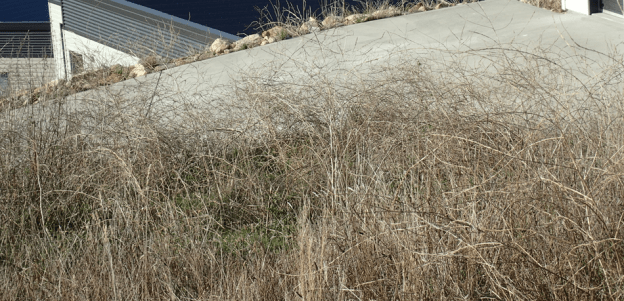
The McGill Rise saga continues. It’s disappearance from the media does not mean it is done and dusted.
Back in October last year I mentioned the disciplinary panel run by CBOS focusing on those involved in the development. Back in October CBOS said “action is underway to close this process out”. On March 14 I learnt that the panel continues. But readers might be pleased to learn that there have been consequences. CBOS said: “practitioners that are no longer licensed include both of the builders, the building surveyor and the building designer”.
The other strand to the story is Glenorchy City Council’s obligation to ensure public health and safety.
The legal list of the Tasmanian Supreme Court in the Mercury (March 15) contained the item “For notice to review: Aviation Consolidated Holdings Pty Ltd v Glenorchy City Council”. Council helpfully provided the following response to my query.
“The Council infringed Aviation Holdings (the developer company for McGill Rise) in relation to non-compliance with a building order which required the removal of unapproved fill from a pad at McGill Rise. That infringement notice was contested in the Magistrates Court, but the developer was convicted of that offence. The developer has recently appealed their conviction to the Supreme Court.”
In plain English:
- Council made a building order requiring the removal of unapproved fill from a pad.
- The developers did not do it in time.
- Council issued the developer an infringement notice.
- The developers disputed the notice in the Magistrates Court.
- The Court came down on the side of Council, and upheld the notice.
- The developer is now appealing the Magistrates Court decision all the way to the Supreme Court.
The agenda for the coming March 27 Council meeting includes a closed session item “22. Approval of legal expenditure”. That item could include McGill Rise. Decisions on whether or not to continue legal action are not easy. Council does not have inexhaustible funds – and can get no external funding to help.
Are the developers, Aviation Consolidated Holdings, trying to wear Council down, to make them give up? My feeling is that most of us would want Council to hold the developers accountable for their actions. But how much do we want them to spend?
We’ll try to keep you up to date.

Council takes action on safety
At tonight’s open council meeting (27/11/2023) we “accidentally” learnt of action being taken right now to improve safety at the McGill Rise site.
Agenda item 20 relates to a fairly obscure report – the Procurement And Contracts Exemptions Report – explaining where council has in unusual or extreme circumstances taken a shortcut through the Council’s Code for Tenders and Contracts.
To quote the agenda, the exemption was for “the supply and installation of water filled barriers to be used at the base of batter slopes on the McGill Rise development at Claremont. The product installed is to provide a safety barrier for any potential rocks that become dislodged from the face of the building platform batters.” The action was urgent.
Ratepayers will be pleased to learn that they should not expect to have to contribute to the cost of $65,165 because council has issued abatement notices on the affected properties.





 Glenorchy City Observer